⚡ In three lines
1 — Canada bought the NATO ecosystem, not the better spec sheet
2 — The day after losing, Korea opened NATO procurement talks
3 — Industrial competition is shifting from firm vs firm to bloc vs bloc
What happened
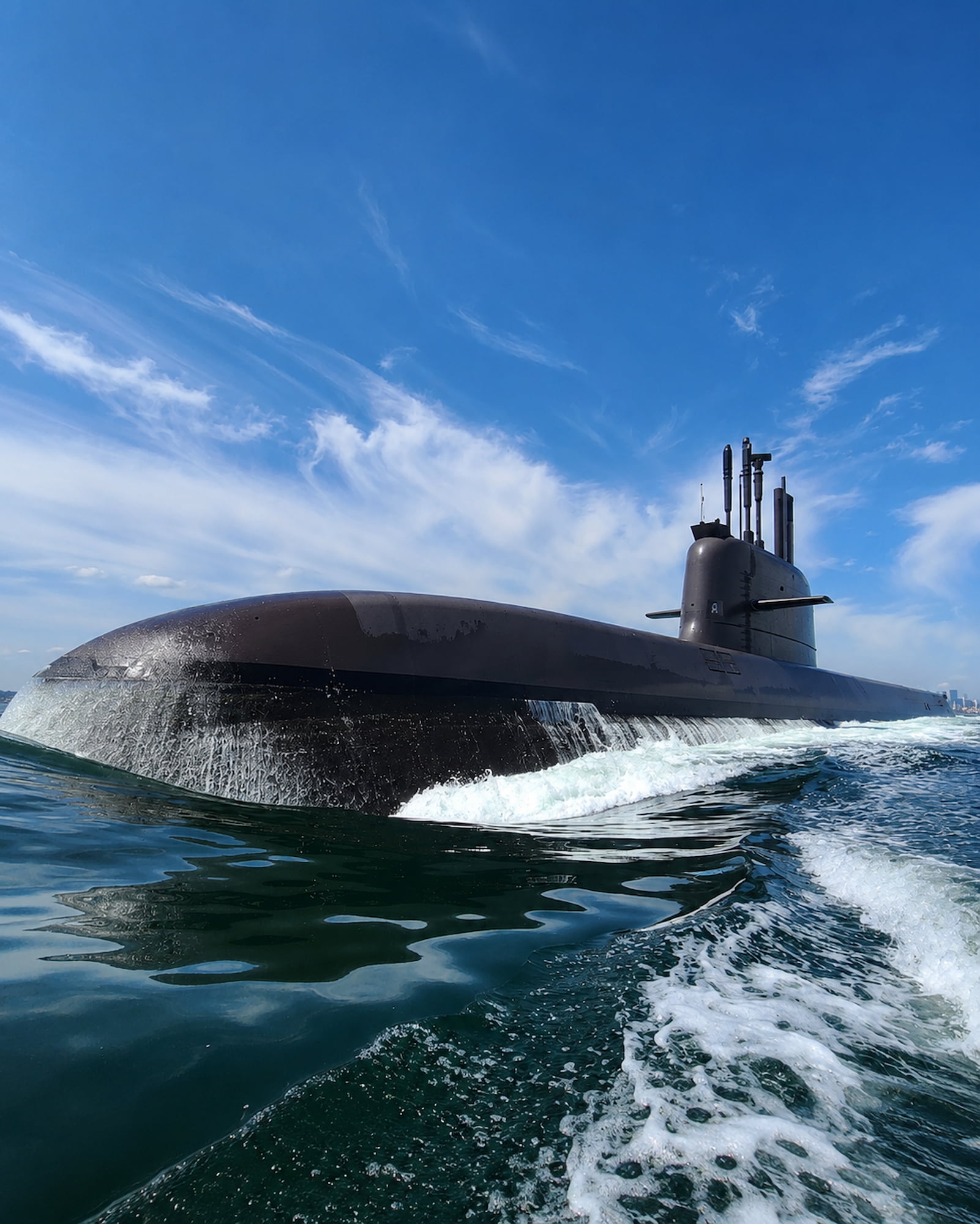
On 6 July, the Canadian government named Germany's TKMS (ThyssenKrupp Marine Systems) as the preferred bidder for its next-generation fleet of 12 submarines — the Canadian Patrol Submarine Project. With construction plus roughly 30 years of maintenance included, the programme is estimated at up to ₩60 trillion, or about US$40 billion.
Korea's Hanwha Ocean lost the final selection. But Canada's own assessment said both the Korean and German proposals fully met the navy's performance requirements. Ottawa also kept Hanwha Ocean as the reserve supplier in case talks with TKMS collapse.
And the very next day, 7 July, President Lee Jae-myung met NATO Secretary General Mark Rutte at the NATO summit and agreed to begin negotiations on a Korea–NATO procurement framework agreement. Once signed, it gives Korean companies an institutional path into NATO's joint procurement market.
Why a loss opened a door
Canada judged that both bids met the required performance.
So what decided the final choice?
What TKMS was selling wasn't just a submarine. It offered a package: a joint operating system with Germany and Norway, interoperability built to NATO standards, a long-term maintenance ecosystem, and the alliance network itself.
Germany and Norway even reshuffled their own order queues so Canada could take delivery sooner, and pitched a plan for joint operations in the Arctic and the Atlantic.
"A defence tender is
no longer an audition."
Performance is merely the price of admission. The final contract goes to whoever already lives inside the ecosystem — moving on the same communications, trained on the same drills, sharing the same maintenance chain, trusted enough to share intelligence.
This was never Hanwha Ocean versus TKMS.
It was Korea's nation-corporation team versus the Germany–Norway–NATO defence bloc.
On the selling side, state and company move as one team. On the buying side, the customer no longer scores the weapon alone — it prices in the strategy and operating efficiency of the whole alliance.
Read through this frame, the Korea–NATO procurement talks announced the day after the loss make perfect sense.
If you can't be a full member, you start by getting a visitor's pass.
But this pass carries one extra price tag: diplomatic cost.
NATO joint procurement is not simple market entry. Whose weapons you operate and whose intelligence you share is, in itself, the language of choosing sides. Every step Korea takes toward NATO is read simultaneously in Beijing, Moscow, and Pyongyang.
Korea's position is not simple. Its largest trading partner is China; its security frontline is North Korea; and behind North Korea sits a deepening military alignment with Russia. Calculations a NATO member never has to make, Korea must make at every single step.
Which is why the language of these negotiations is worth watching. Announcing the agreement, the presidential office drew a careful line: Korea's status remains that of a NATO partner, and the impact on relations with China and Russia will be limited. Grow the substance of cooperation, lower the volume of side-choosing — a deliberate calibration. It also explains why a government that fought the Canadian bid flat-out is not trumpeting its defence-export record now.
Korea's Ukraine support reads in the same grammar: a US$100 million comprehensive package — with lethal weapons excluded. Contribute, while showing exactly which line you won't cross.
Middle-power diplomacy is not about picking a side. It's about managing the volume. Open the door — quietly.
If the wall Korea hit in Canada was interoperability and the alliance ecosystem, this agreement is the first attempt to cut a door into that wall.
"Technology gets compared.
Blocs get chosen."
What to watch
WATCH 01
How far does the Korea–NATO procurement agreement extend?
The point of this agreement is not a declaration of friendship. Whether it expands into NATO joint-procurement programmes and complete weapons systems determines the real market size. But the wider the scope, the louder the signal read in Beijing and Moscow — scope negotiation is volume negotiation.
WATCH 02
Does 'interoperability' keep gaining weight in defence tenders?
Canada showed that performance alone may not close a contract. If interoperability, joint training, and maintenance ecosystems keep appearing as conditions in major NATO and European tenders, that's the signal: the defence market is moving from product competition to bloc competition.
WATCH 03
Does a Korean company win its first NATO joint programme?
An agreement is only a beginning. The moment a Korean firm lands its first NATO joint-procurement or long-term maintenance contract, institutional cooperation is proven to convert into an actual market.
WATCH 04
Does the TKMS–Canada contract close smoothly?
TKMS is only the preferred bidder — the final contract is not yet signed. If terms shift or the schedule slips, Hanwha Ocean's reserve-supplier status becomes a live variable again.
SIGNAL NOTE
In semiconductors, the supply chain became the moat. In defence, the alliance network is the moat.
Companies still build the products — but markets no longer judge companies alone. They judge which supply chain you belong to, which alliances you're wired into, and whose standards you run on.
Across AI, semiconductors, and defence, the current is the same: industrial competition is moving from firm versus firm to bloc versus bloc. Canada's submarine programme is the clearest picture of that shift yet.
For information only. Not investment advice.